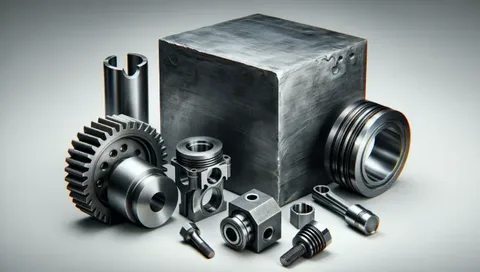

CNC machining is one of the most important manufacturing technologies used in modern industries. It allows engineers and manufacturers to transform digital designs into highly precise physical parts using automated cutting tools. If you have ever wondered what is CNC machining, it is a computer-controlled process that removes material from a solid block to create custom-designed components with exceptional accuracy.
From aerospace parts to automotive components and medical devices, CNC machining plays a critical role in producing high-quality products efficiently. This article explains the complete journey—from design to finished product—so you can clearly understand how the process works and why it is so widely used.
Understanding the Basics of CNC Machining
CNC stands for Computer Numerical Control, which means machines are controlled by pre-programmed computer software rather than manual operation. When asking what is CNC machining, it refers to a subtractive manufacturing process where material is removed layer by layer to achieve a desired shape.
In simple terms, a digital design (CAD file) is converted into instructions (G-code) that guide the machine’s movements. This ensures high precision and repeatability, even for complex parts that would be difficult to create manually.
Key points:
- CNC stands for Computer Numerical Control
- Uses digital instructions (G-code) for machining operations
- A subtractive manufacturing process (removes material instead of adding it)
- Produces highly accurate and repeatable parts
- Used across industries like aerospace, automotive, and healthcare
From Digital Design to CAD Modeling
The CNC machining process begins with a digital design created using Computer-Aided Design (CAD) software. Engineers create a 2D or 3D model of the part, defining every dimension, curve, and detail before production begins. This stage is essential because it determines how the final product will look and function.
Once the design is complete, it is converted into a format that CNC machines can understand. This is where Computer-Aided Manufacturing (CAM) software comes in, translating the design into machine-readable code.
Key points:
- CAD software is used to design the part digitally
- Engineers define exact measurements and tolerances
- CAM software converts designs into machine instructions
- Ensures accuracy before physical production begins
- Helps identify design errors early in the process
Programming and Machine Setup
After the design is finalized, the next step is programming the CNC machine. The CAM-generated G-code is loaded into the machine’s controller, which tells it exactly how to move, cut, and shape the material. This step is crucial in answering what is cnc machining because it highlights the automation aspect.
Machine setup also involves selecting tools, securing the raw material (workpiece), and calibrating the machine. Operators ensure everything is properly aligned so that production runs smoothly without errors.
Key points:
- G-code instructs machine movements and cutting paths
- Operators select appropriate cutting tools for the job
- Raw material is securely fixed on the machine bed
- Machine calibration ensures precision and accuracy
- Automation reduces human error and increases efficiency
The CNC Machining Process in Action
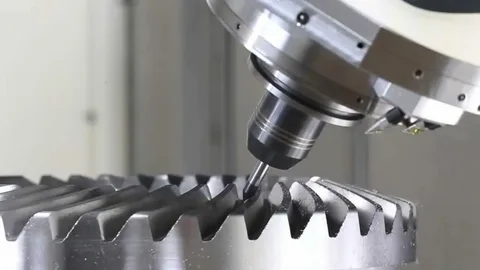
Once everything is set, the CNC machine begins cutting the material according to the programmed instructions. High-speed rotating tools remove excess material layer by layer until the final shape is achieved. This is the core stage when understanding what is cnc machining in real-world applications.
Depending on the complexity of the part, different CNC machines such as mills, lathes, or routers may be used. Each machine performs specific operations like drilling, turning, cutting, or shaping with extreme precision.
Key points:
- Machine executes programmed instructions automatically
- Material is removed through cutting, drilling, or milling
- Different CNC machines serve different purposes
- High precision allows production of complex geometries
- Process can run continuously with minimal supervision
Quality Inspection and Finishing Process
After machining is complete, the part goes through quality inspection to ensure it meets design specifications. Engineers use measuring tools and advanced scanning systems to check dimensions, surface finish, and accuracy. This step ensures that every product meets strict industry standards.
Finally, finishing processes such as polishing, coating, or painting may be applied to improve durability and appearance. These final touches turn a raw machined part into a ready-to-use product.
Key points:
- Quality control ensures dimensional accuracy
- Measuring tools verify precision and tolerances
- Surface inspection detects defects or imperfections
- Finishing improves strength, appearance, and durability
- Final product is ready for industrial or commercial use
Conclusion
Understanding what is cnc machining helps us appreciate how modern manufacturing achieves such high levels of precision and efficiency. From digital design and programming to automated machining and final inspection, every step plays a crucial role in producing accurate and reliable components.
CNC machining continues to revolutionize industries by reducing production time, minimizing human error, and enabling the creation of highly complex parts. As technology advances, its importance in manufacturing will only continue to grow, making it a cornerstone of modern engineering and production systems.